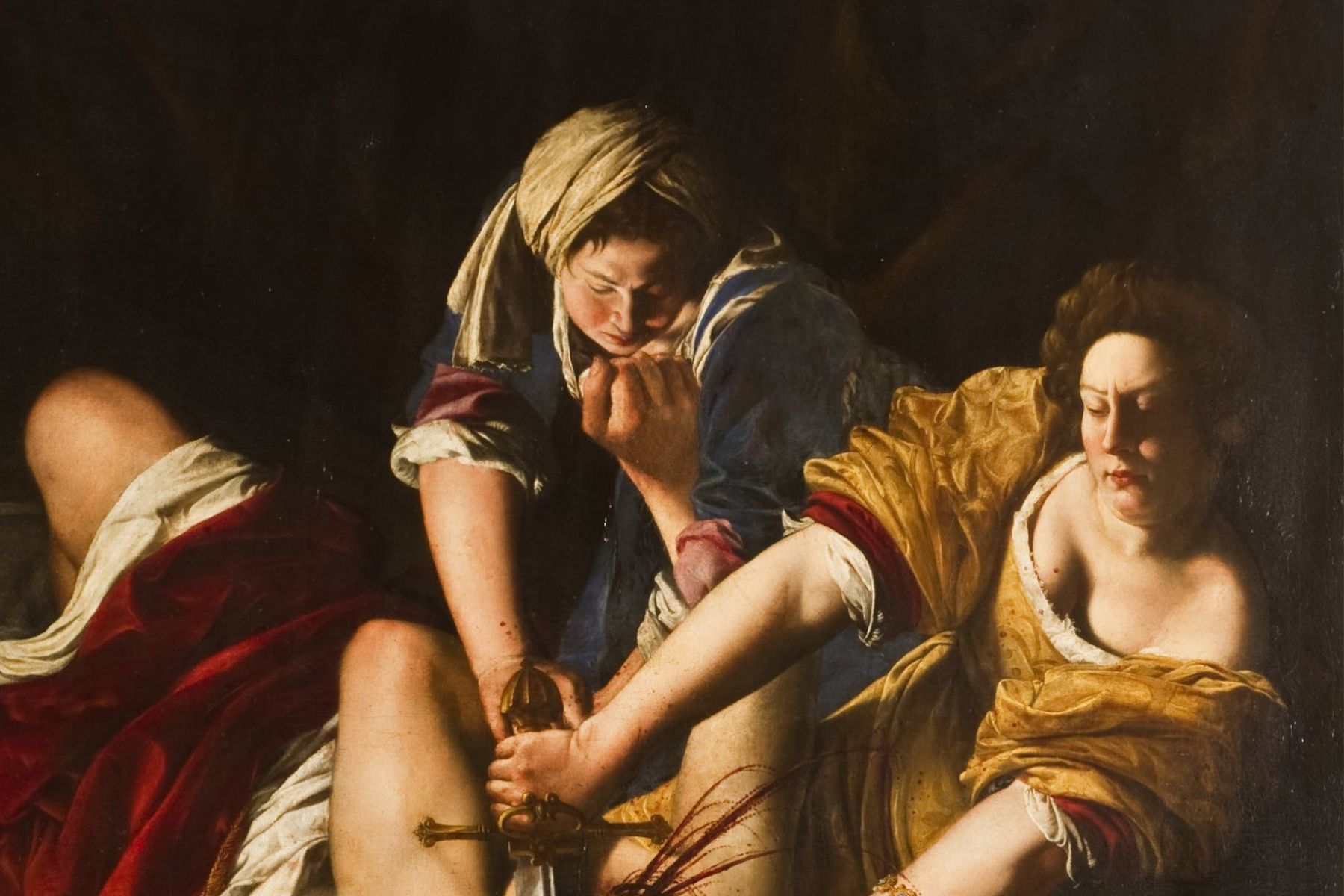
Judith Beheading Holofernes (detail), c. 1612–13, Artemisia Gentileschi. Courtesy of the Uffizi Gallery, Florence.
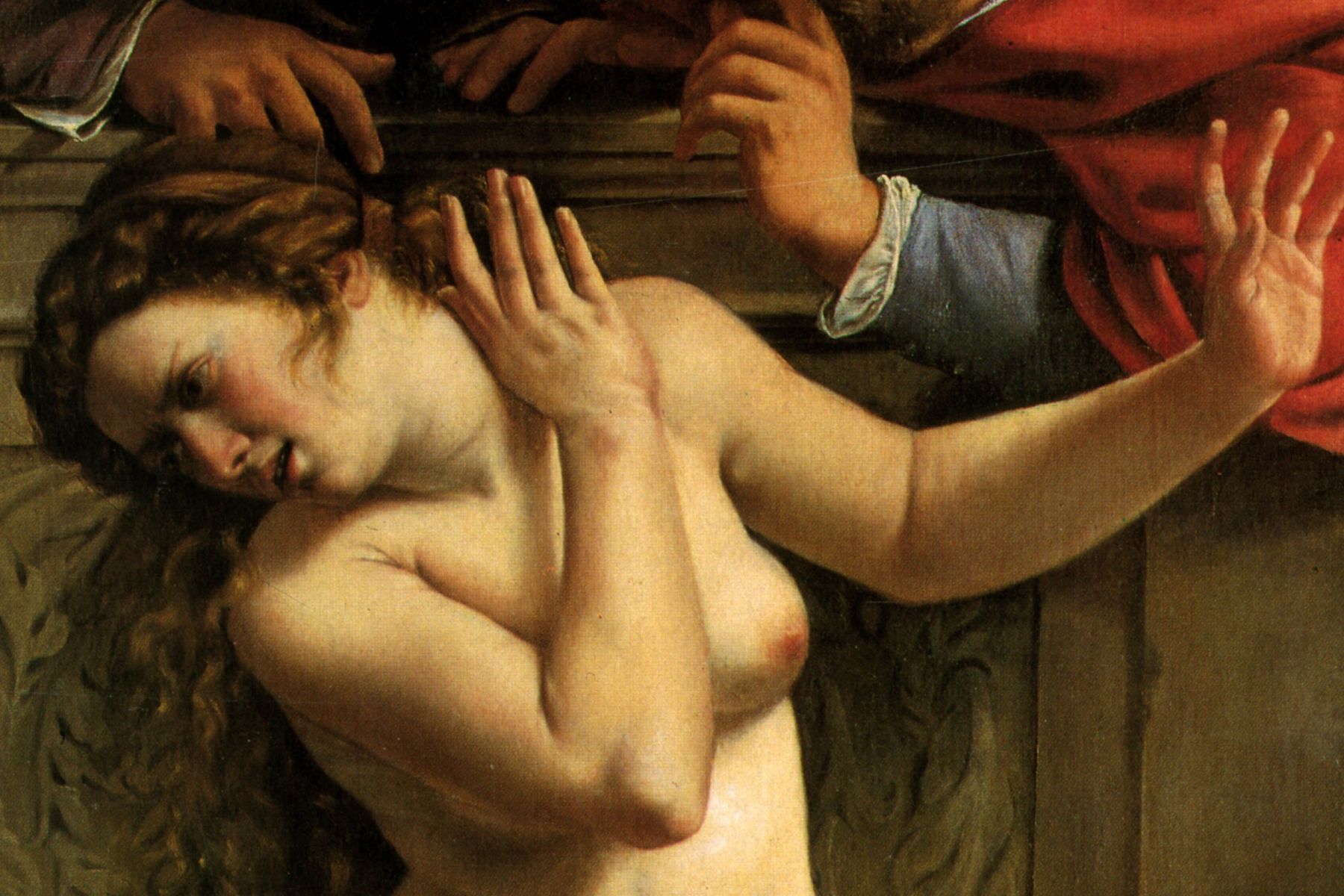
Susanna and the Elders (detail), c. 1610, Artemisia Gentileschi. Schloss Weißenstein, Germany. Public domain.
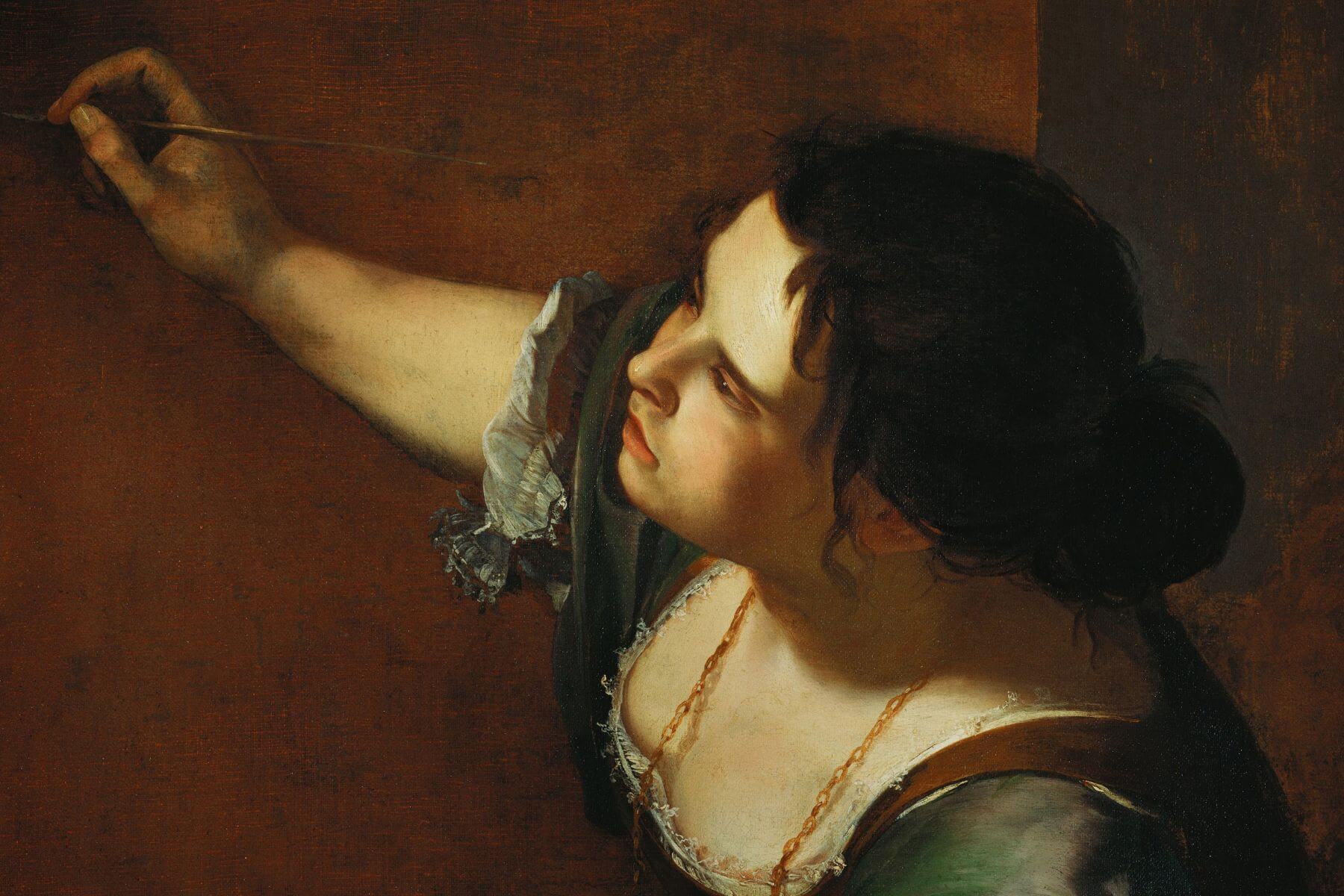
Self-Portrait as the Allegory of Painting (La Pittura) detail, c. 1638–39, Artemisia Gentileschi.
Courtesy of The Royal Collection Trust.
CategoryMuse, Maker, Master
FocusArtemisia Gentileschi
Period/MovementBaroque
Image CreditSee Image Use & Legal Notice
Share
Artemisia Gentileschi: Painting Power in a Man’s World
A Baroque master. A survivor. Artemisia painted female rage and resilience like no one before her. Her brush didn’t just tell stories. It demanded justice.