
Jackson Pollock's large-scale drip painting in black, white, and tan stretched across a vast canvas
One: Number 31, 1950, Jackson Pollock. Courtesy of The Museum of Modern Art.
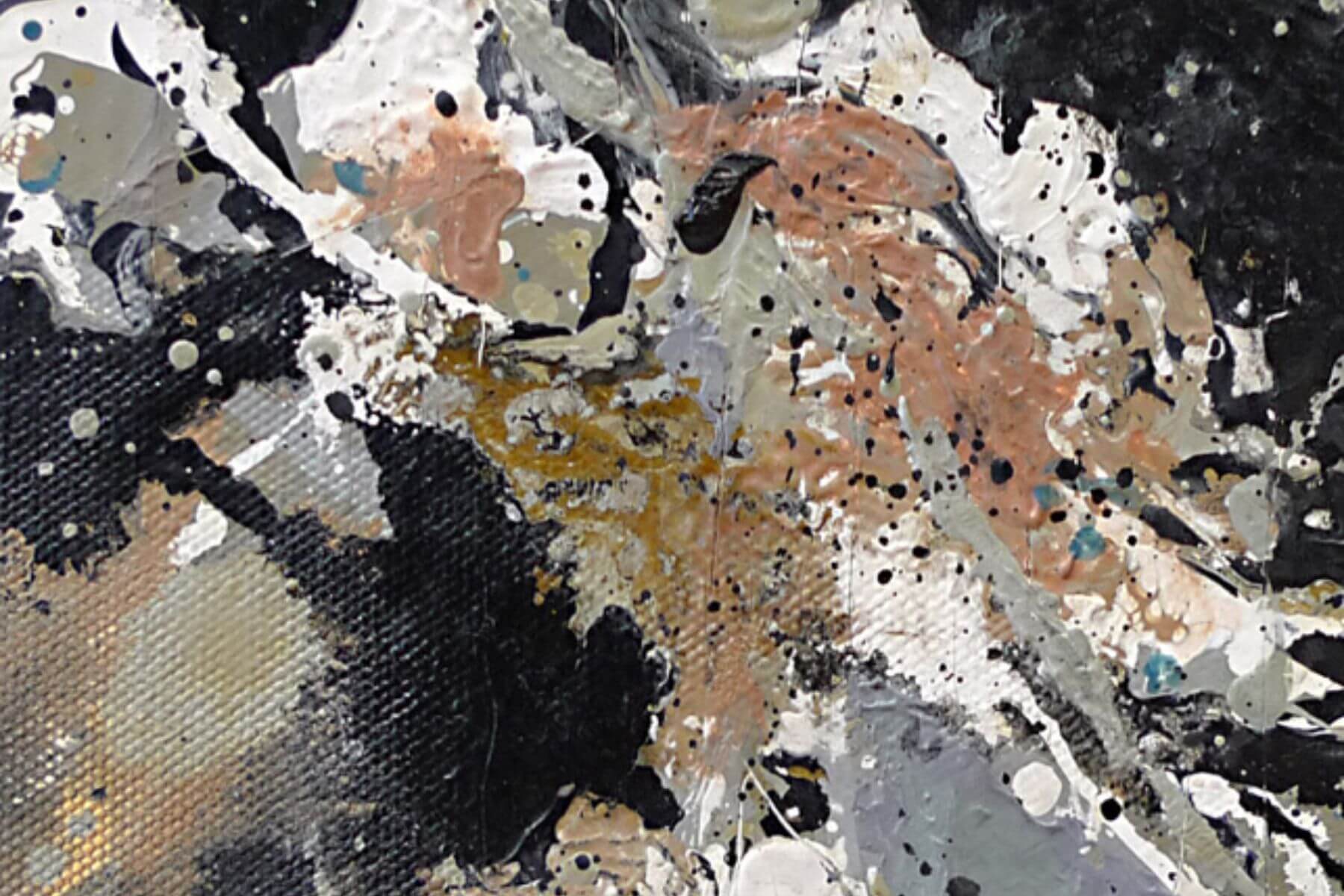
Detail view of Jackson Pollock’s One: Number 31 with black, white, and tan paint splatters and linear drips
One: Number 31 (detail), 1950, Jackson Pollock. Courtesy of The Museum of Modern Art.
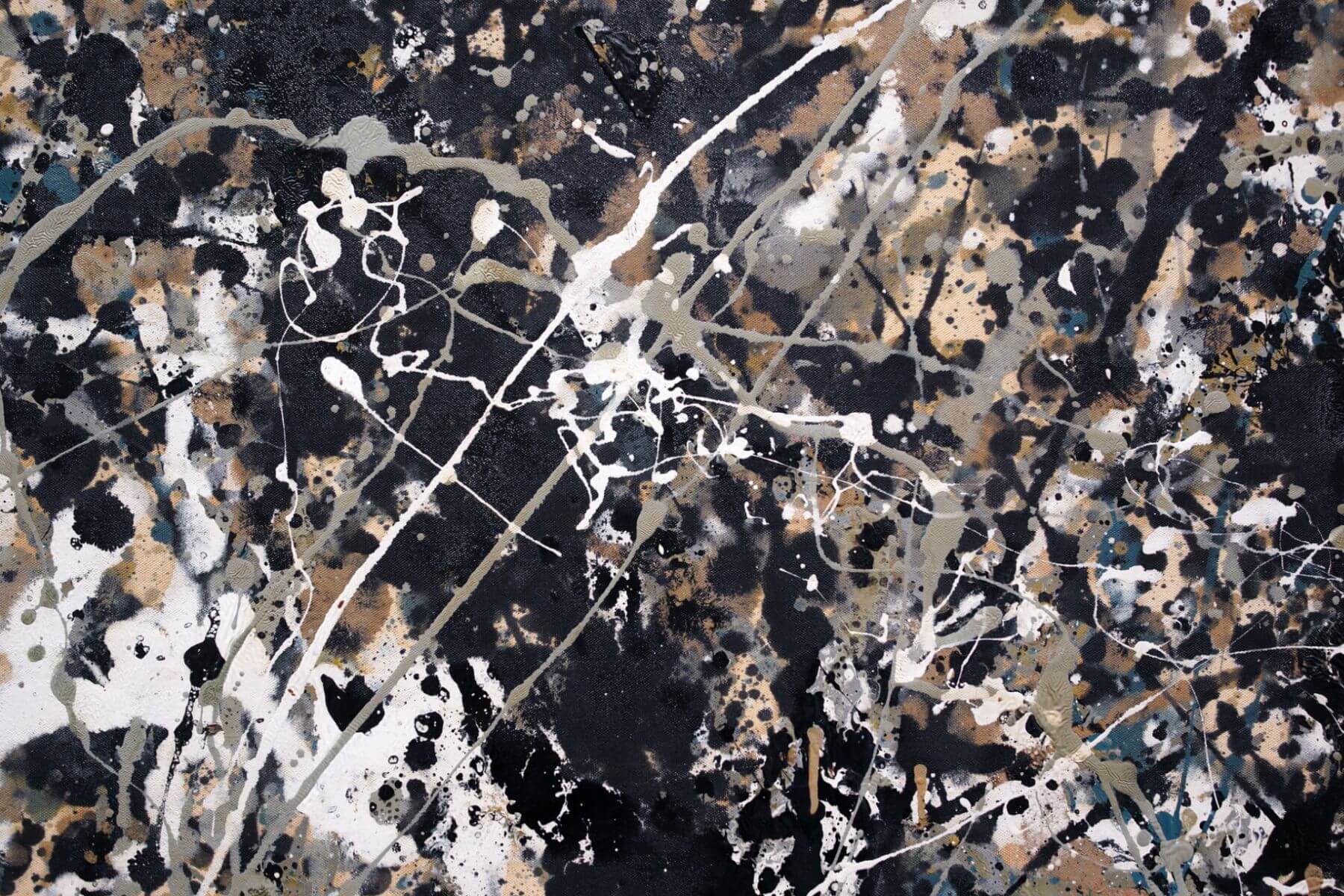
Detail view of Jackson Pollock’s One: Number 31 with black, white, and tan paint splatters and linear drips
One: Number 31 (detail) 1950, Jackson Pollock. Courtesy of The Museum of Modern Art.
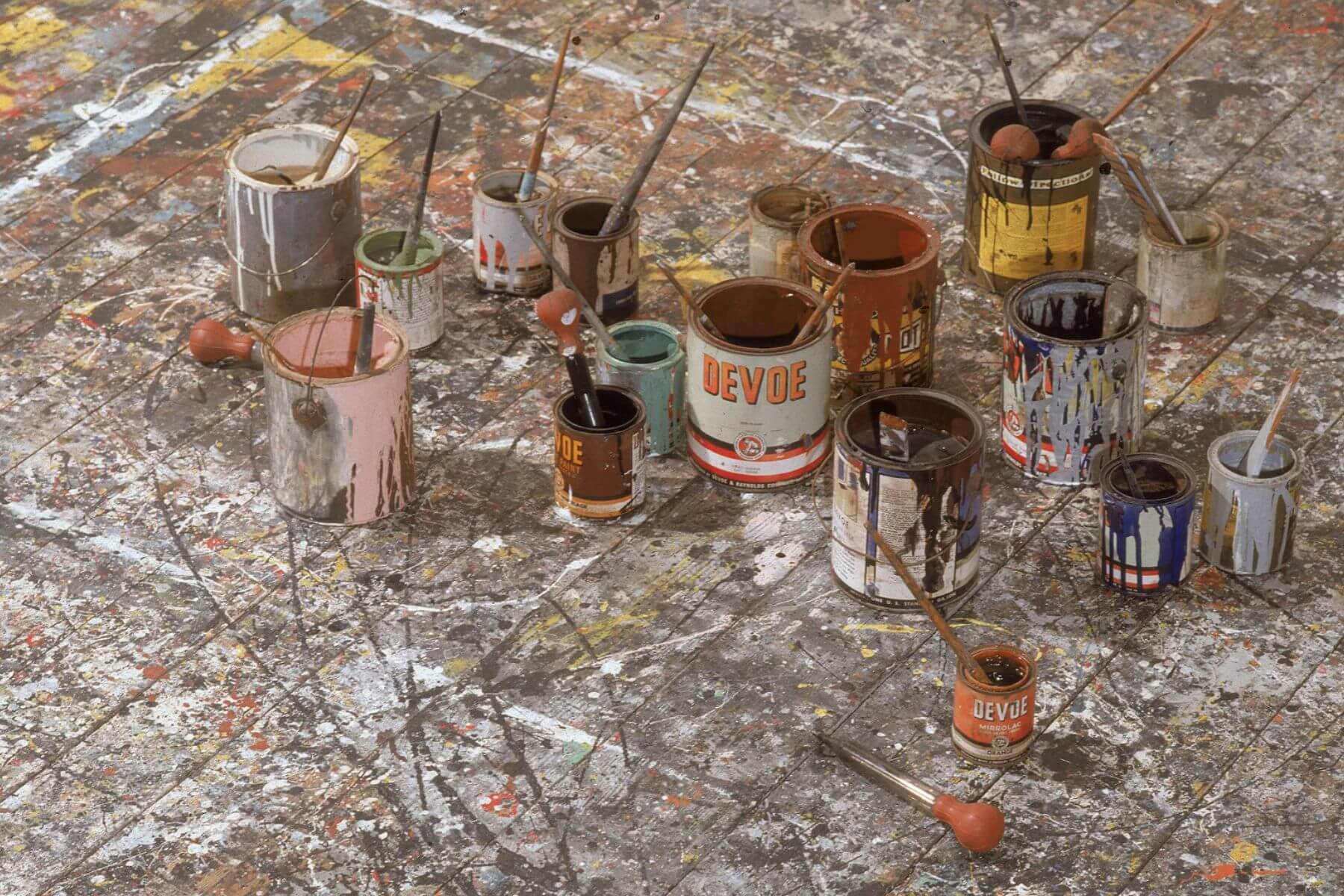
Paint-splattered floor of Jackson Pollock’s studio with open Devoe paint cans and stir sticks
Jackson Pollock’s studio, 1991. Photo by Susan Wood. Courtesy of Artsy.
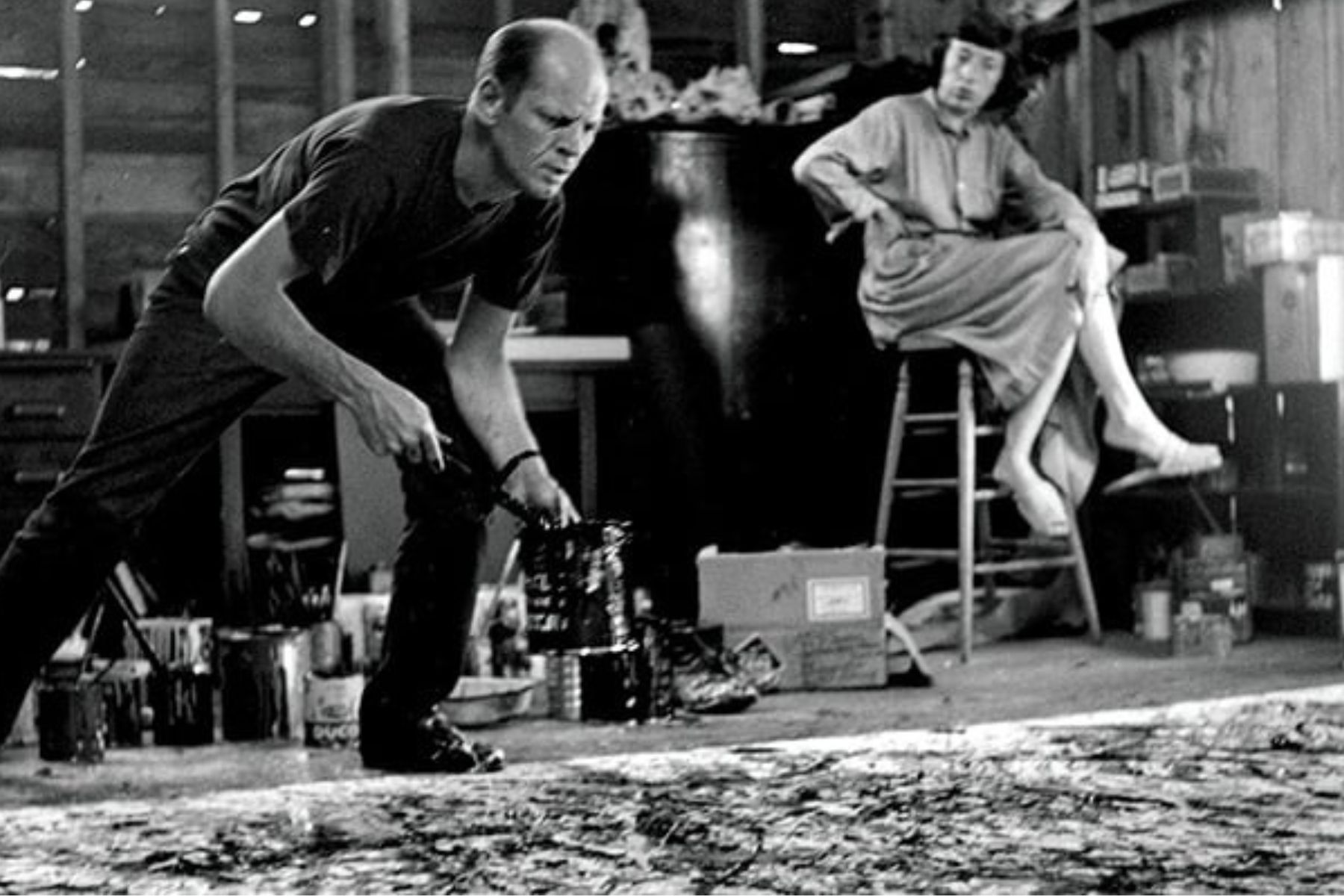
Jackson Pollock painting in his studio using his signature drip technique while Lee Krasner watches nearby seated in chair
Jackson Pollock and Lee Krasner in the studio, 1950. Photo by Hans Namuth, courtesy of the Pollock-Krasner Foundation.
Category Modern Masters & Market Icons
ArtistJackson Pollock
Period/MovementAbstract Expressionism
Image CreditSee Image Use & Legal Notice

Jackson Pollock: Rhythm, Rupture & the Drip

Massive canvases. Paint poured, flung, danced across the floor. A rebel with a cause. He demanded we feel before we see. Pollock didn’t just paint—he moved. Every stroke was a gesture. A body in motion. Rhythm in revolt. His drip technique and emotional volatility turned him into AbEx’s most explosive icon.

To collect a Pollock is to collect rhythm, rawness and DNA.