
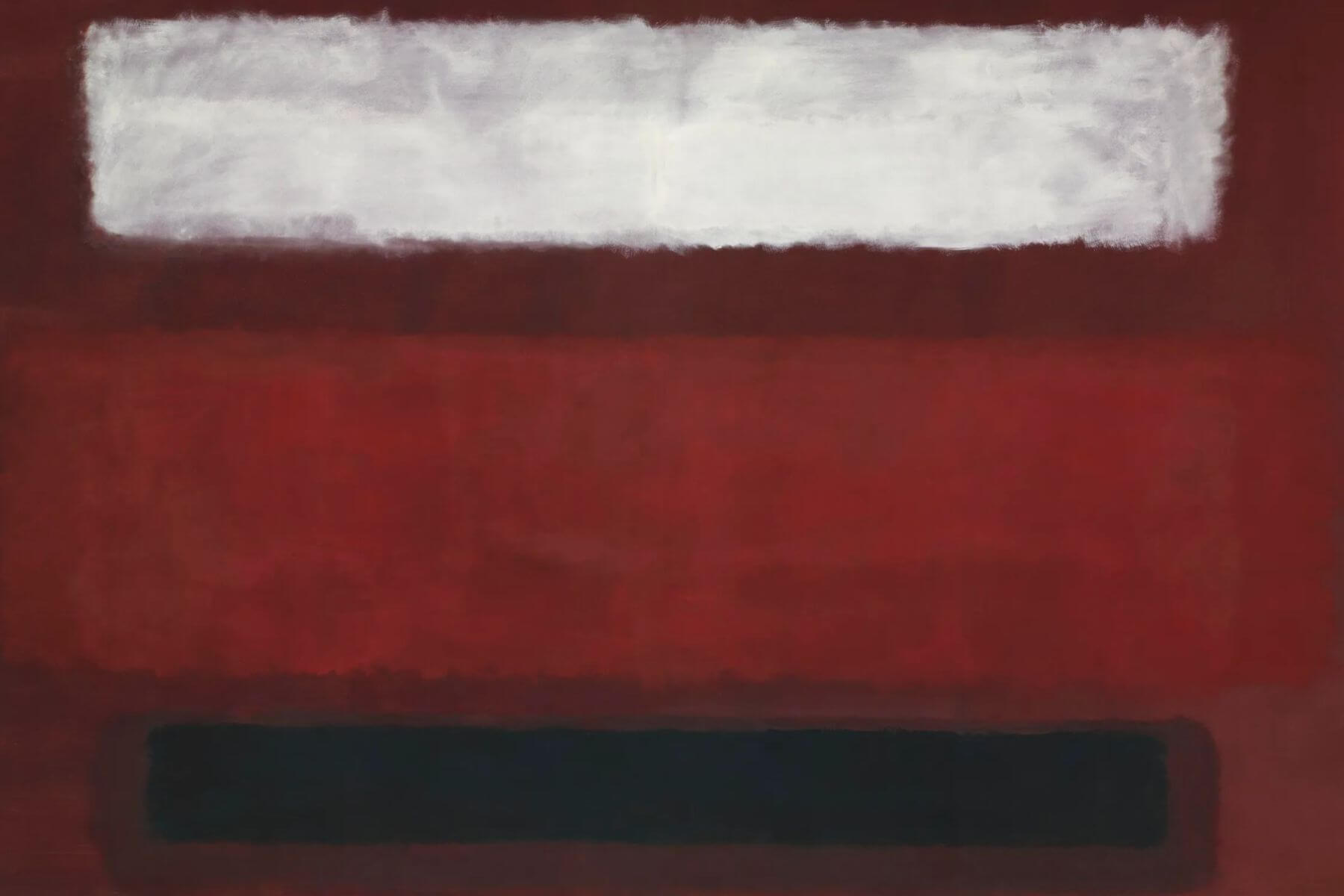
Mark Rothko’s abstract composition with white and black rectangles on a deep wine background
No. 9 (White and Black on Wine) detail, 1958, Mark Rothko. Courtesy of Christie’s.
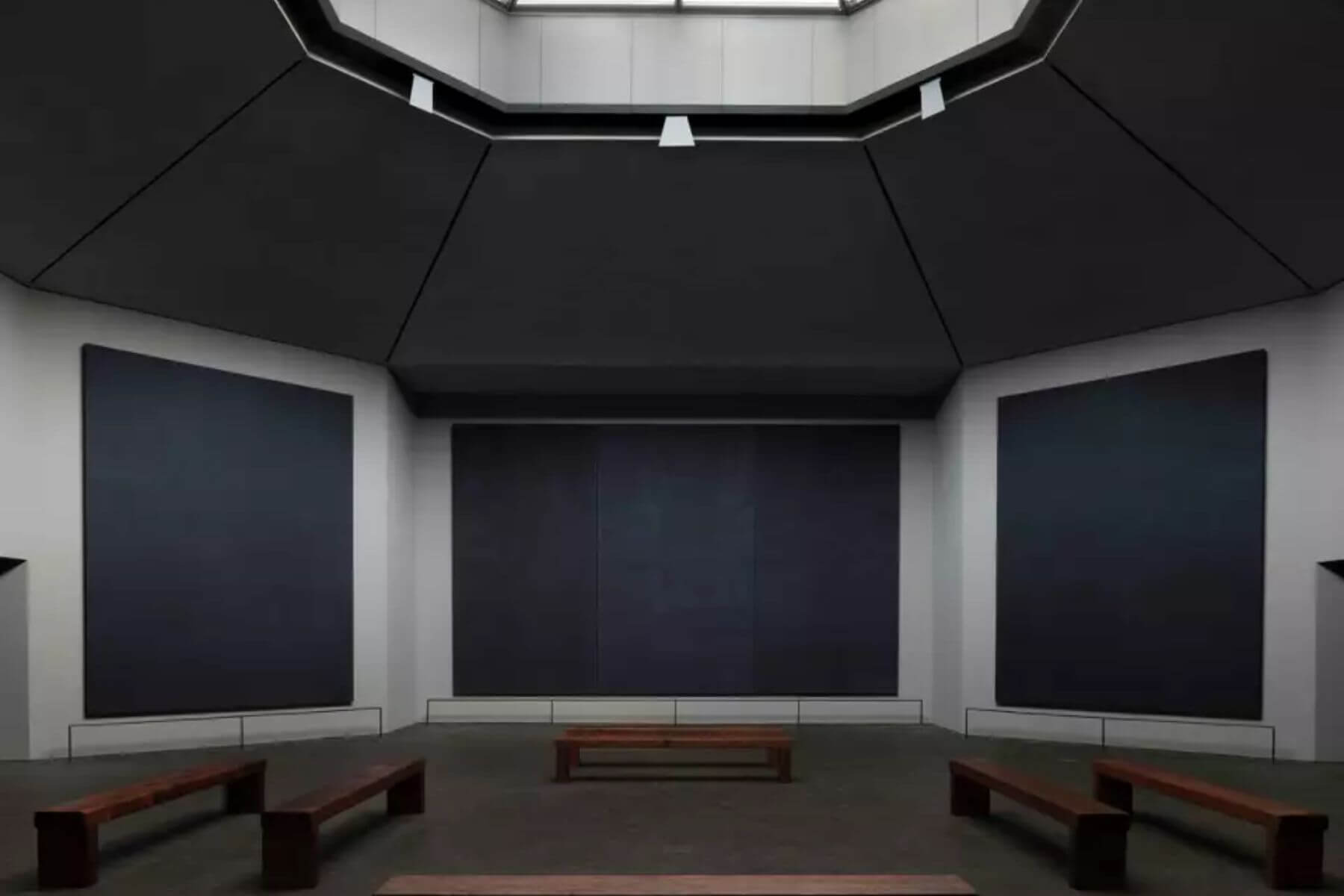
Central triptych of dark-toned abstract panels in Rothko Chapel
Central triptych, Rothko Chapel, 1964–67, Mark Rothko. Courtesy of Rothko Chapel.
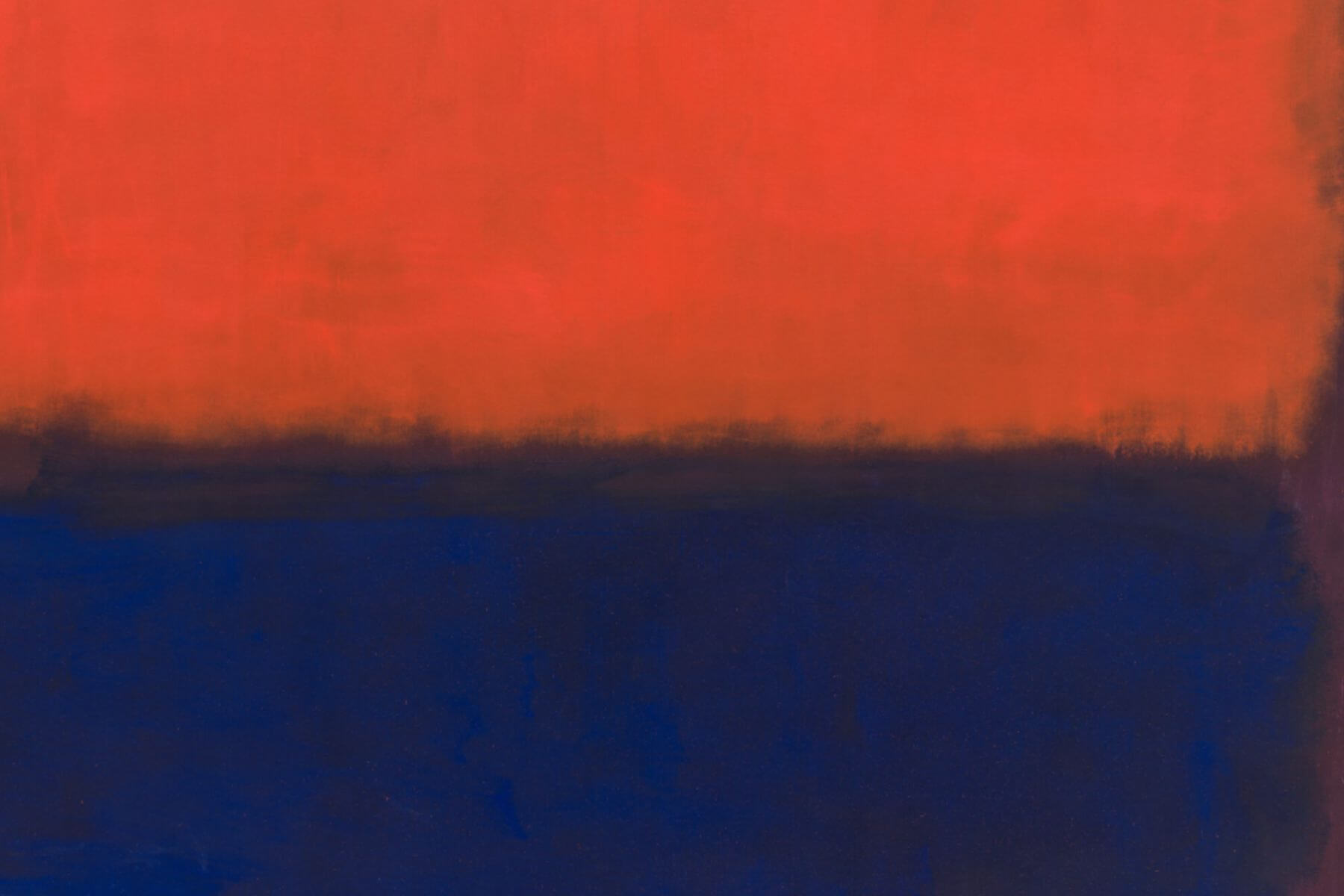
Mark Rothko’s abstract painting with layered fields of rust and blue colors
No. 61 (Rust and Blue) detail, 1953, Mark Rothko. Courtesy of The Museum of Contemporary Art, Los Angeles.
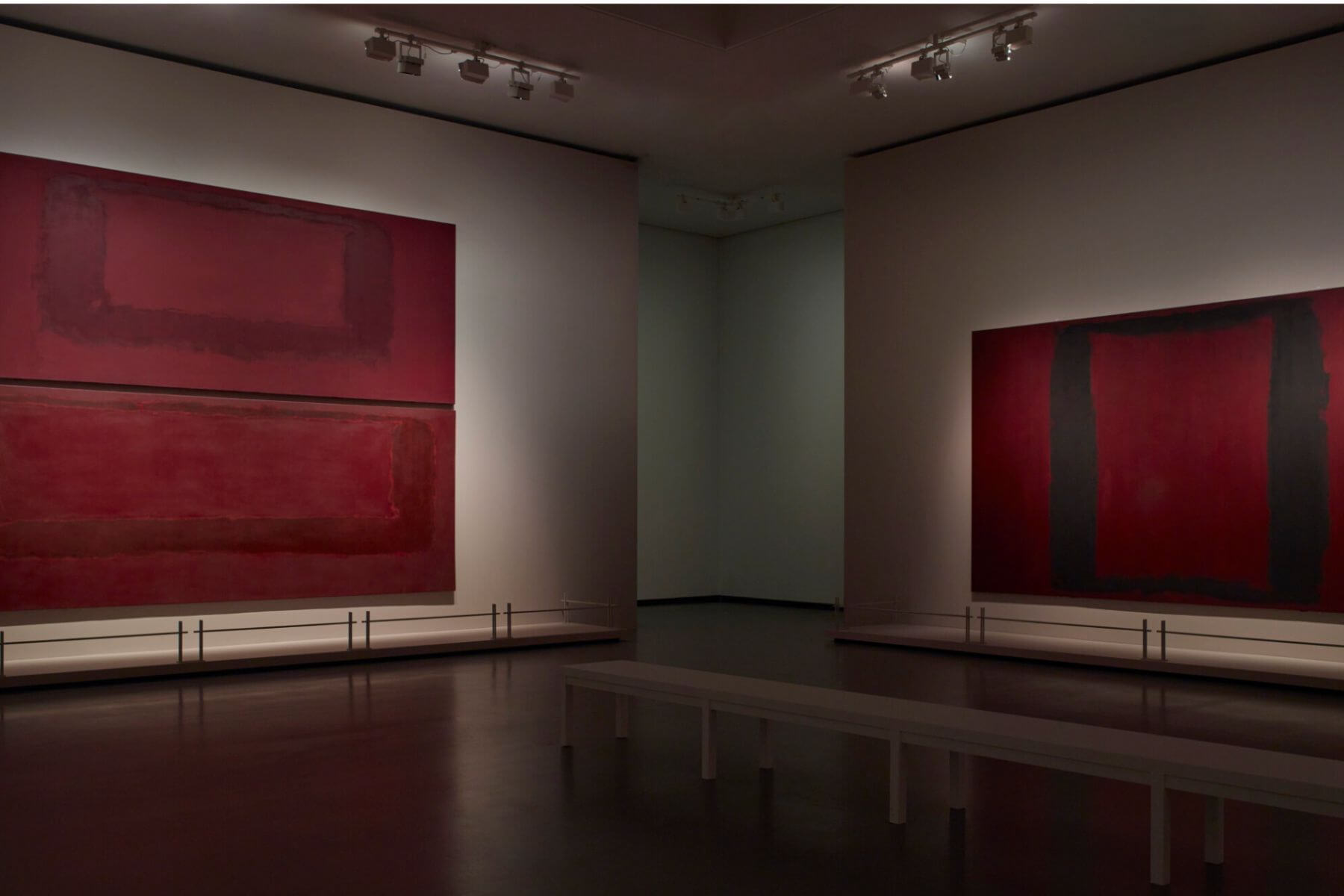
Red and black Seagram mural panels by Rothko installed at Fondation Louis Vuitton
Seagram Murals (Red on Maroon, 1959; Black on Maroon, 1959), installation view, Fondation Louis Vuitton, Paris, 2023. Courtesy of Fondation Louis Vuitton.
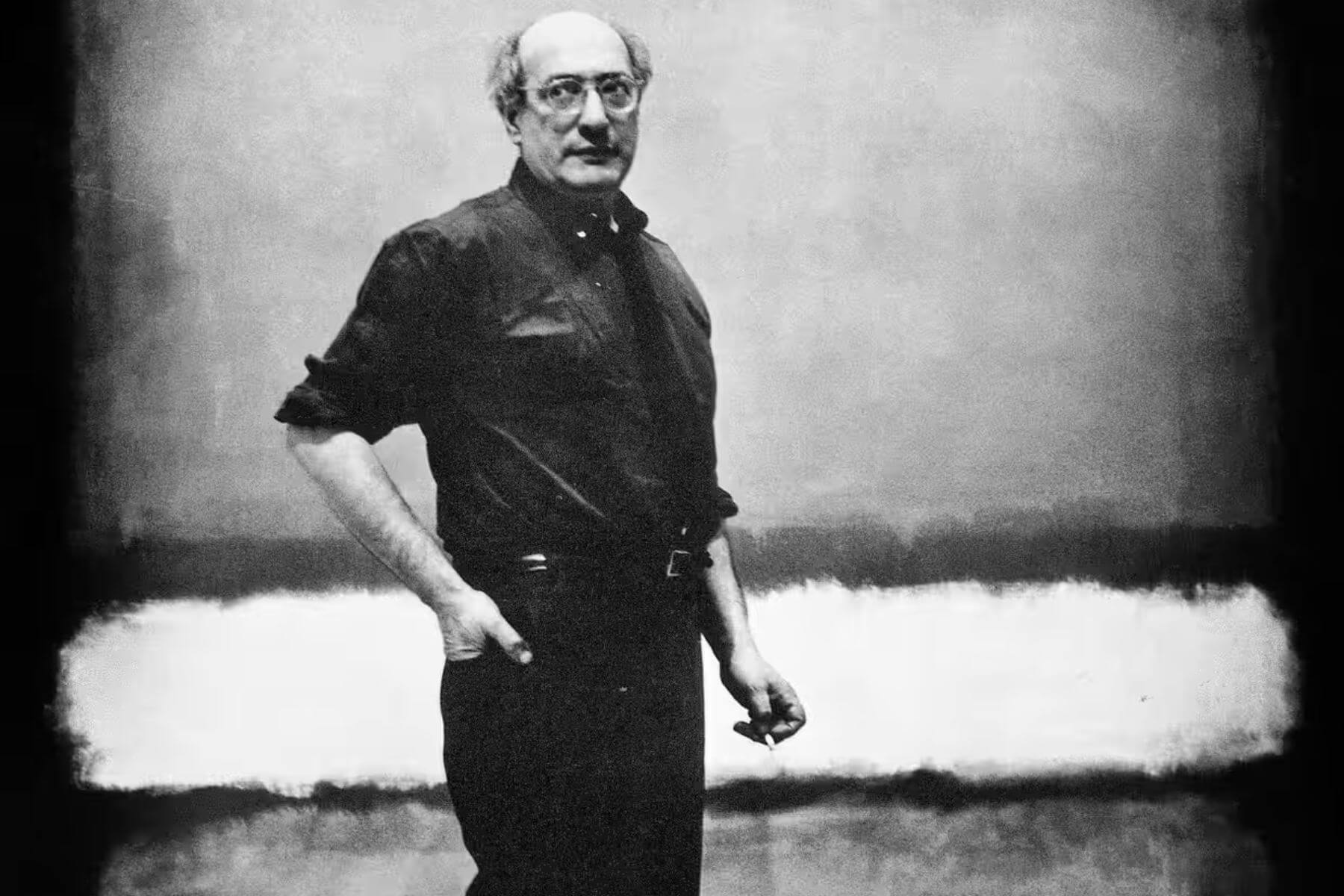
Black and white portrait of Mark Rothko standing in front of his painting No. 7, 1960
Mark Rothko in front of No. 7, 1960. Photo attributed to Regina Bogat (unconfirmed). Courtesy of the Fondation Louis Vuitton retrospective catalog.
CategoryModern Masters & Market Icons
FocusMark Rothko
Period/MovementColor Field
Image CreditSee Image Use & Legal Notice

Mark Rothko: Color, Silence & the Weight of Feeling

His canvases don’t show figures. They feel like them. Rothko’s color fields pulse with emotion, inviting viewers to sit, stare, and sink. His shift from myth to minimalism, and the spiritual philosophy behind it, created spaces where presence and absence blur together.

Not paintings. Portals. Stand still long enough, and you disappear inside.